 Gardening Services Chigwell: Recycling and Sustainability for a Greener Garden
Gardening Services Chigwell is committed to creating an eco-friendly waste disposal area across every job we do. Our approach to a sustainable rubbish gardening area focuses on diverting organic and reusable materials from landfill, increasing local reuse and working with borough-level waste separation practices to make every garden tidy and low impact.
 We aim to combine practical garden care with measurable environmental outcomes. From small domestic clearances to larger landscape projects, our team implements best practice waste segregation on site and consolidates materials for transport to appropriate municipal or partner facilities. We support local boroughs' and county guidance on separating green waste, compostables and recyclables to streamline onward processing.
What we collect and where it goes
Our sustainable rubbish gardening area procedures separate materials at source: green waste for composting, timber for chipping and reuse, soil and turf for screening, and clean inert materials for appropriate transfer. We also identify items suitable for reuse and redistribution through charity partners. Implementing an eco-friendly waste disposal area on-site reduces contamination, improves recycling rates and lowers disposal costs.
We coordinate with nearby transfer stations and waste hubs run by county and borough authorities. By working with Essex County transfer facilities and borough-run sites that serve neighbouring London boroughs, we ensure material reaches the right processing stream — municipal composting, wood recycling, or reuse centres — rather than landfill.
Recycling percentage target and tracking
Our short-term target is to achieve a 70% recycling and reuse rate across all garden waste streams within the next three years, moving towards an 85% diversion goal for specific contracts. To reach this, we run regular waste audits, use weighed loads for reporting and set site-specific KPIs so each project contributes to our sustainability targets.
How we measure: records of loads taken to transfer stations, weighbridge receipts, photos of on-site separation and monthly reports enable transparent tracking. This data helps us optimise routes, vehicle utilisation and reuse opportunities.
 We recognise local recycling practices — for example, the emphasis some boroughs place on food caddies and separate green bins — and adapt our sorting to match local collection and processing standards, reducing cross-contamination and improving final recycling rates.
Low-carbon fleet and logistics
Our fleet transition to low-carbon vans is central to lowering the carbon footprint of garden waste removal. We deploy electric and plug-in hybrid vans where feasible, and invest in route optimisation software to reduce mileage. These measures lower emissions and support a greener, local circular economy.
Charging infrastructure, driver training in eco-driving, and scheduled consolidation of small loads into fewer trips all contribute to making our rubbish gardening operations less carbon intensive. We continually review vehicle technology as part of our sustainability plan.
Charity partnerships and community reuse
We actively partner with local charities and community groups to give reusable items a second life. From plant pots and tools to salvaged timber and well-preserved furnishing elements, items sorted on site are inspected and diverted to charity reuse centres and community allotments, supporting social value alongside environmental benefit.
Our charity links prioritise local impact — community allotment initiatives, wildlife trusts and reuse centres in the region — to keep materials circulating within Chigwell and nearby neighbourhoods rather than being processed far away.
Materials we routinely recycle include:
- Green waste (grass cuttings, hedge trimmings) to municipal or commercial composting.
- Wood and timber for chipping into mulch or reuse in landscaping.
- Soil and turf screened and re-used where appropriate.
- Metal and clean rubble taken to appropriate recycling streams.
- Plastic pots and plant trays cleaned and directed to recycling or charity reuse.
Site best practice also includes careful separation of contaminated materials and avoiding mixing garden waste with general household rubbish, which maximises what can be composted or reused. We offer practical advice to clients on reducing single-use plastics, choosing sustainable planting materials, and designing landscapes that minimise waste over time.
 In line with local authority waste separation guidance, our teams label bags and containers for each material stream and follow borough-specific rules where collection is managed by a district council. This alignment with local policies ensures smoother handover to municipal systems and higher final recycling performance.
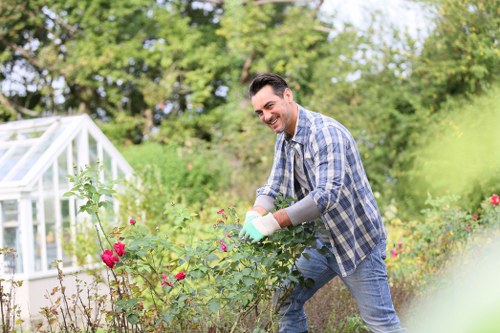 Our commitment is to continue improving the chain from garden to processing facility: reducing waste generation, increasing on-site separation, partnering with charities for reuse, and operating low-carbon vehicles. Together with clients and local organisations we create a genuinely sustainable rubbish gardening area and an eco-friendly waste disposal area that benefits Chigwell and the surrounding communities.